WHAT ARE ACUTE CORONARY SYNDROMES?
Interventional Cardiology is a subspecialty of cardiology in which catheter-based diagnostic tests and treatment are provided for coronary artery disease, valvular disease, structural heart disease, peripheral vascular disease and various other diseases. Interventional cardiology is a branch of cardiology that deals specifically with the catheter based treatment of structural heart diseases.
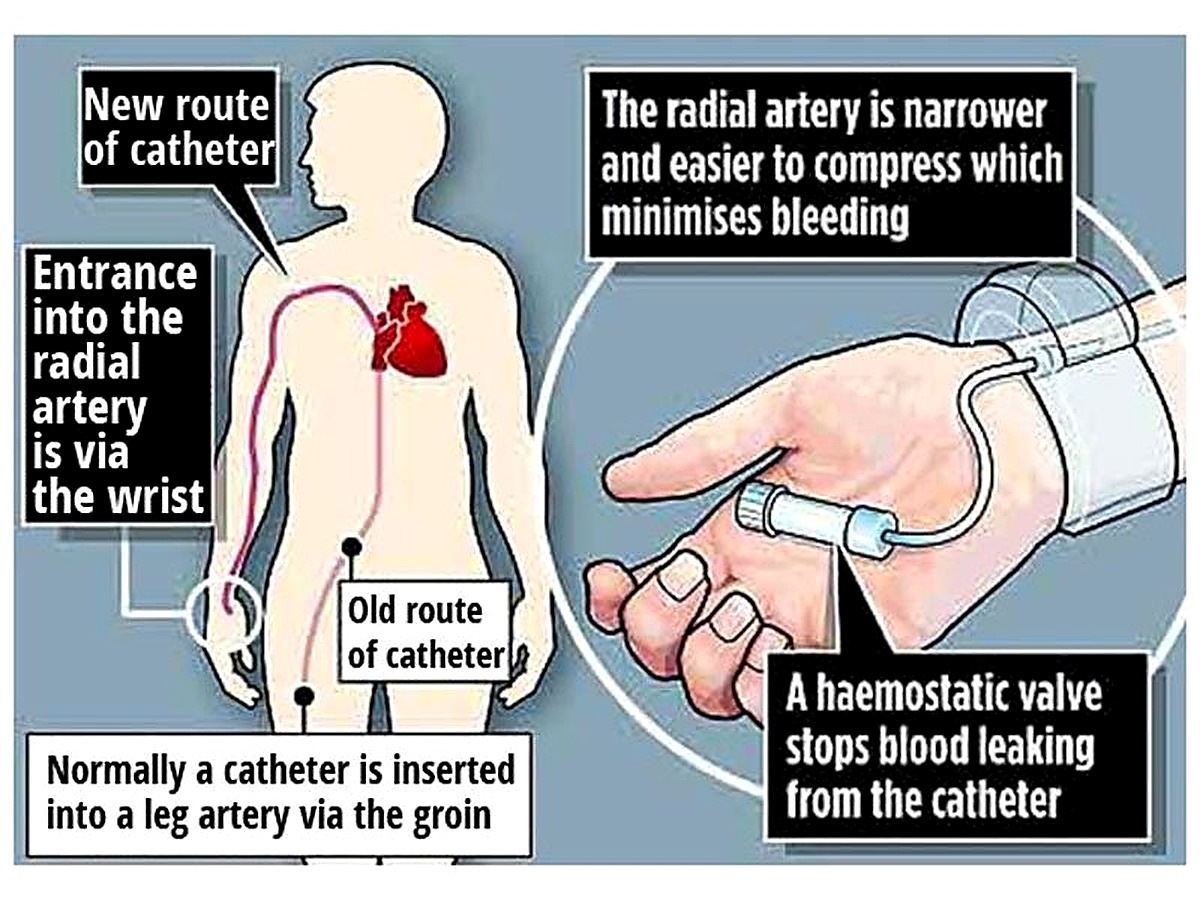
A large number of procedures can be performed on the heart by catheterization. This most commonly involves the insertion of a sheath into the femoral artery (but, in practice, any large peripheral artery or vein) and cannulating the heart under X-ray visualization (most commonly fluoroscopy). The radial artery may also be used for cannulation; this approach offers several advantages:
1. Easy accessibility of the artery in most patients,
2. Easy control of bleeding even in anticoagulated patients,
3. More comfortable to the patient because they are capable of sitting up and walking immediately following the procedure, and
4. The near absence of clinically significant sequelae in patients with a normal Allen test.
The main advantages of using the interventional cardiology or radiology approach are the avoidance of the scars and pain, and long post-operative recovery. Additionally, interventional cardiology procedure of primary angioplasty is now the gold standard of care for an acute myocardial infarction.